

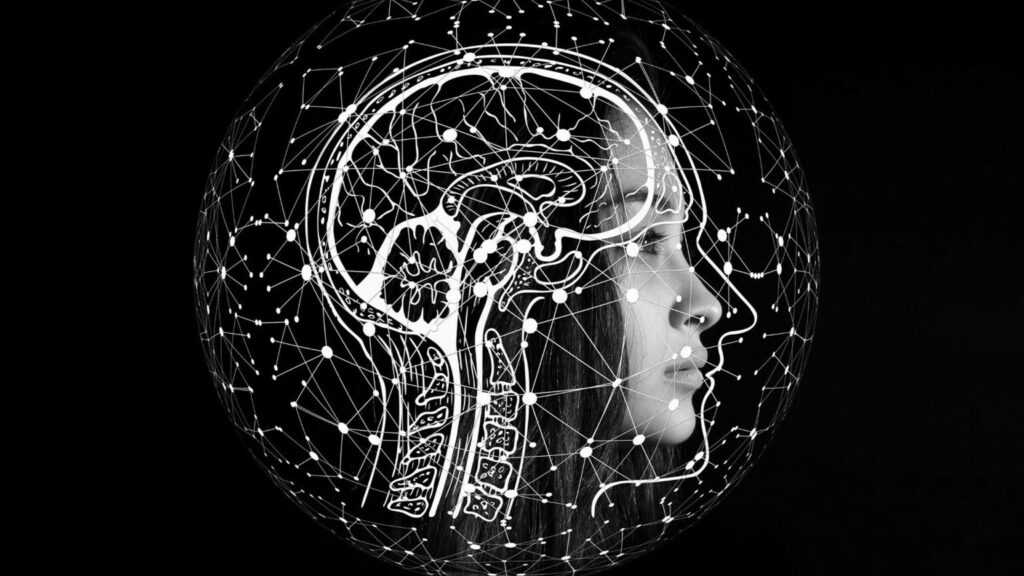
Literature and research on holograms
There are a number of research results available in the literature related to the impact of static and moving 2D images on cognitive processes. Considering that our company has launched the production of displays with a 3D holographic effect, it is extremely important to focus on the topic of research on holograms. Their impact on the processes that create and modify cognitive structures (mental representations) in the cognitive system. So far, such research on holograms has simply not been conducted.
The theory of the holographic memory model
In 1982, Janet Metcalfe Eich developed the theory of the holographic memory model (HMP), based on the metaphor of a hologram. This is a method of recording three-dimensional images with all their spatial characteristics in such a way that every point of the hologram contains complete information about the object being holographed. This makes it possible to reconstruct the entire image from the most basic parts of the hologram. According to the HMP, the holographic system operating in the brain stores a vast number of „copies” of the same object or event. Importantly, this information is stored in parts of the cortex that are distant from one another. Each „copy” contains a complete description of the memorized object or event. During recall, if an external stimulus resembles a pattern encoded in memory, an entire network of interconnected neurons in the brain responds. This enables the recognition of external objects. When new, unknown information reaches the brain, its constituent elements are analyzed; known and unknown elements are distinguished based on criteria operating within the cognitive system, and only then is a new whole formed from them. The HMP explains such characteristics of memory as plasticity and ease of recognition. According to the HMP, humans have the ability to instantly identify a vast number of people and objects familiar to them. Regardless of distance and from any viewing angle, and once they have been recognized, they can quickly recall a significant amount of information about them.93% – non-verbal communication
Albert Mehrabian in his book "Silent Messages" published in 1971, he wrote: "93% all human communication is non-verbal communication. 90% of the information sent to the brain is visual information. They are processed by the brain much faster than text because the brain is used to processing images. People remember 80% from what they see, but only 20% from what they read.” (Albert Mehrabian, Silent Messages, Wadsworth Pub. Co., 1971.)Visual attention
Scientists have been conducting research on visual perception for years. It has been determined that there are approximately 250 million receptors that detect visual stimuli. That is about ten times more than the number of olfactory receptors. In contrast, this is 100 times more than the number of tactile receptors and 10,000 times more than the number of auditory receptors. Visual attention is not a homogeneous cognitive process. It consists of many subsystems and mechanisms, often with different functional characteristics. These include, for example, focused visual attention and visual field search processes. (see Eysenck, Keane, 2005; Styles, 2006). The ability to conduct research using actual 3D holograms may help answer a key question- Do 3D holograms allow for better remembering of the presented content, and to what extent?
- What other cognitive functions do they have a significant impact on?