

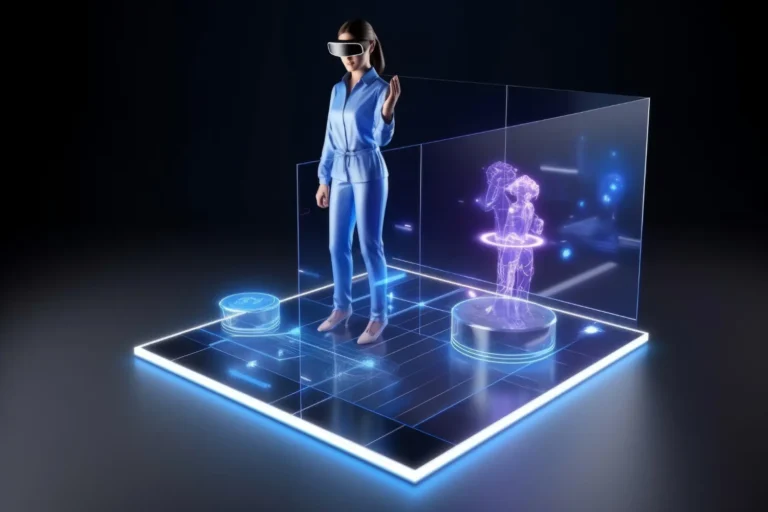
Interactive holograms – the future of advertising and customer experiences
Advertising is no longer a one-way street. Gone are the days when the brand spoke while the audience merely watched. Customers do not want to be passive observers; they want to participate. They want to explore, swipe, select, and react. The more they can do themselves, the greater their engagement and the better their understanding of the product. That is why everything is naturally shifting toward interaction. And this is where the next step comes in: the interactive hologram. It is not merely a visual effect, but a tool that transforms the way people interact with a brand. It does more than just show.
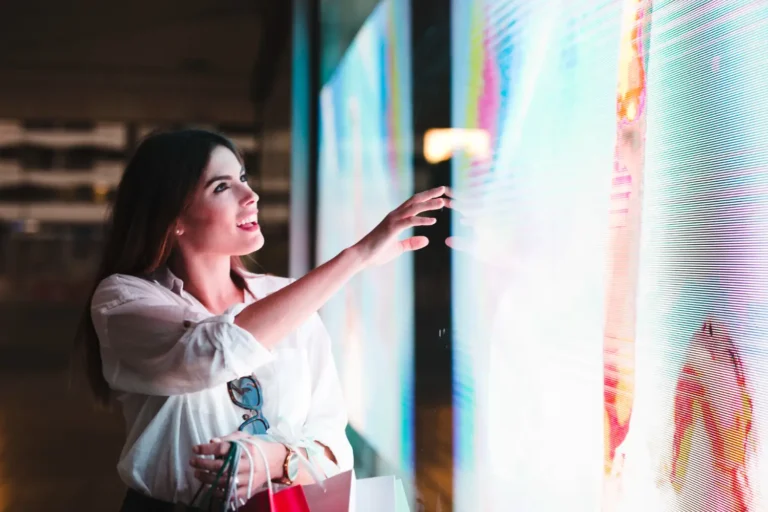
How do holograms support communication for premium brands?
Premium brands do not fight for attention; they attract it. Yet today, that is no longer enough. The premium customer has seen it all—design, minimalism, and luxury materials. They need something more: an experience. This is where holograms come in for premium brands—not merely as a technology, but as a language of communication. Key takeaways: holograms create an aura of exclusivity and innovation, enhance the perception of product quality, reveal details invisible in traditional displays, boost brand memorability, and powerfully engage the viewer's emotions. Why a hologram?
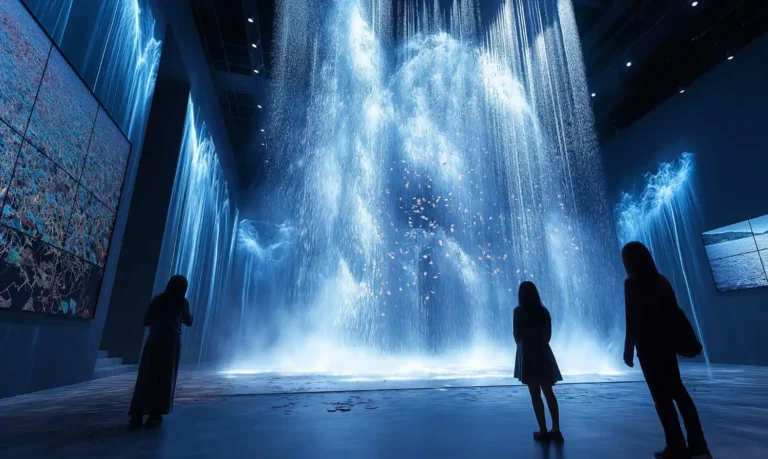
Holograms at trade shows and events – how to make your stand stand out from the crowd?
At trade shows, everyone clamors for attention—colors, banners, hostesses, LED screens—and it all starts to look the same. The problem isn't a lack of ideas on the part of companies, but rather that audiences have seen it all before. That is precisely why something different has emerged: the hologram. It is not merely a gimmick, but a genuine tool for capturing attention and establishing an initial connection. Holograms are an increasingly popular choice for events. Here’s why! Key takeaway: a hologram instantly catches the eye and holds the viewer's attention.
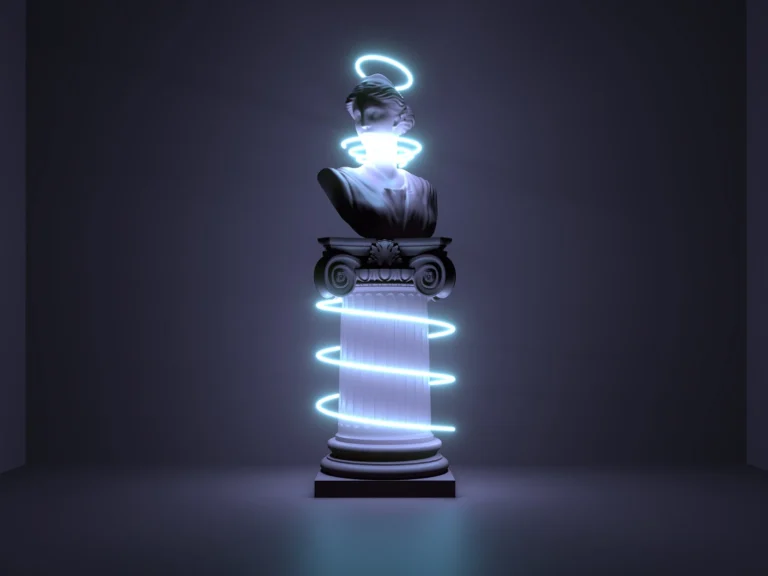
How does holographic technology work? 3D hologram vs. 2D projection – what is the difference and what really makes an impression? How does holographic technology work?
When faced with the choice between a 3D hologram and a classic 2D projection, it might seem like a mere matter of technology. In practice, however, they represent two entirely different worlds in terms of perception, emotion, and effectiveness. Comparing a 3D hologram to a 2D projection only makes sense once you understand how human beings see and react. It is not just a visual difference—it is a completely different approach to audience interaction. What the eye sees versus what the brain comprehends… A 2D projection is
How does holographic technology work?
An image that doesn’t exist—yet you can see it? Is that even possible? It looks like magic, but it relies on physics, the psychology of vision, and a clever optical trick. Holographic 3D projections aren't an illusion; they are the result of technology that plays with how your eye processes images. Holographic technology operates based on the phenomenon of persistence of vision (POV)—a mechanism that allows the brain to "stitch together" rapidly successive images.
Holograms in everyday life – where you really encounter them and how they influence your decisions
Until recently, holograms were primarily associated with science fiction movies. Today, they are increasingly appearing in settings familiar from everyday life—in stores, at events, and even in education. This is not merely a passing novelty; it represents a shift in how you perceive images, products, and information. A hologram does more than just catch the eye—it engages attention and emotions in a way that differs fundamentally from traditional screens. Key takeaways from the article:

How to Design a Promotional Campaign Using Holographic Projectors?
An advertising campaign featuring holograms and utilizing 3D marketing has revolutionized the way brands communicate with their audiences by offering unique, three-dimensional visual experiences. Holographic technology, which eliminates the need for 3D glasses, captures attention and increases the memorability of the message, making it extremely effective. Companies that use holographic displays build a modern image and stand out from the competition, which translates into increased customer trust and loyalty. What is a hologram advertising campaign and why
What is a hologram?
What is a hologram? It is a three-dimensional image created using light that, unlike ordinary photographs, records both the intensity and the phase of the light, offering depth and perspective. Holograms—which utilize the phenomena of interference and diffraction—are used in security, medicine, and entertainment, and their versatility makes them an effective safeguard against counterfeiting. This technology, based on the overlapping of laser beams, plays a crucial role in faithfully reproducing details and viewing angles, ensuring
Human Hologram – Price. What influences the cost?
The cost of a human hologram is a key factor determining the accessibility of this innovative technology across various sectors. In this post, we note that the price of high-quality projectors can reach hundreds of thousands of zlotys, while licenses to use a celebrity's likeness can range from tens to hundreds of thousands of zlotys. However, increasingly affordable prices are opening up opportunities for smaller businesses and educational institutions. What exactly is a human hologram, and how does the price affect...